Tuesday, November 13, 2018

Do Men and Women Truly Experience Different Emotions?

Image result for men and women emotionsImage result for men and women emotions

"Stop crying, you're acting like a little girl." is a phrase I've heard my parents say numerous times to my younger brothers and their grandson (my son). It's probably the one phrase (among many others) that frustrates me the most. Why? Because it perpetuates societal gender stereotypes. At a young age, most males are taught to suppress their feelings so that they seem "stronger" and more dependable, while females are often taught they need to always be "soft" and dainty. And if a female is emotional, well society says that's acceptable because females of course are naturally more emotional than males--or so we were wrongly taught. But, if a man were to display any sort of emotion other than those that promote "true" masculinity, society labels him as weak or even "gay". The result of this is an unfortunate toxic cycle of gender norms.
Stereotypes are very powerful. Many members of society, including my parents believe that women are more sensitive and experience emotions such as happiness, fear, and sadness more than men. Yet, there are countless research studies that disprove this common belief. Psychologist Denis Cummins attests that men and women experience the same emotions, but express and process them differently. In her article Cummins states, "A number of studies have reported that the sexes recruit different neurocircuitry  when processing and "down- regulating" emotions." In other words, even though men and women use different areas of their brains to process emotions, the emotion felt (whether it be joy, disgust, anger, or sadness) is the same. Another difference between men and women is the way they express emotions, but this shouldn't be much of a shock given societal expectations we are all forced to embody and live up to. Since men are taught to suppress emotions starting at a young age, what do adult men do? That's right, you guessed it! Adult men express their emotions either by not expressing them at all (thereby through down-regulation), or through true "tough-guy" ways such as violence and anger. See the toxic pattern here?

(Source: https://www.psychologytoday.com/us/blog/good-thinking/201406/are-males-and-females-equally-emotional)

Cat-calling. Is it really necessary?

If you were to ask virtually any woman, the answer would be no. It is not. In fact, I'd wager that cat-calling is more harmful to a man's relationship, or potentially new one, with a woman.

When I was down town last week with one of my friends, we got shouted at, whistled at, offered drinks, and comments made at us as we passed by. I also think we got followed, but I'm not 100% sure on that one. All in a five-minute walk (if that) from a concert venue to our favorite hot dog cart. I didn't feel flattered or feel inclined to get to know any of the men that made some sort of remark. It was uncomfortable and annoying. I know that most women, or at least each one that I have come into contact with, feels the same.

So, what is it that prompts men to make these sorts of comments? It's toxic masculinity and the need and desire to sexualize and objectify women that comes with it. I am not sure if the men that make these comments actually want anything to do with the women they are harassing, A lot of the times, it's done just for fun. When women don't reciprocate, give the response that men want, or don't respond at all, the men get aggressive. They call the women slurs and insult their appearance, even though they were positively commenting on it before. It's a power move, a way to establish that they are the dominant ones.


The midterms, hell yea ya'll

Now that it is a week after the midterms ballots have officially been cast and more and more results come in, I think it is important to reflect on some of the candidates that made history this year. I’m sure most if not all members of this blog are more than aware about what is going on in the news and politics these days so honestly this post is more for me than it is for you. For me, this is a post to reflect and know that no matter what side of the political spectrum you are from representation matters and this election made me really excited and hopeful again for the future of our legislative body. It gives me hope that the issues that we march, protest, and die for will one day be issues that our children will no longer face but only read and write papers on in their future classes. There are still many life-threatening issues at hand that need to be addressed but for a brief moment, I want to reiterate the good that is happening across the country right now. 
Our first Indigenous members of Congress were elected this past midterm and they are women, Sherice Davids, and Deb Haaland are now going to be the first Indigenous women ever elected. Davids is a member of the Ho-Chunk Nation while Haaland is a member of the Pueblo of Laguna. Davids also identifies as Lesbian which also makes her the first openly LGBTQ+ Kansas Congressperson. Davids’ previous experience includes working as a lawyer and as a mixed martial arts fighter, as seen by her super awesome muscles (heart eyes).
Other first come out of Michigan and Minnesota as the first Muslim women are elected to Congress. Rashida Tlaid is from Michigan and Ilhan Omar is from Minnesota and will also be the first Somali-American member, representing a large population of refugees living in the greater Minnesota area. 
Other great news comes out of Arizona today as spineless-Jeff Flake’s seat is now occupied by the United States first openly bisexual member of Congress, Krysten Sinema, who has defeated her opponent Martha McSally. 
Texas also has elected their first Hispanic women to Congress as Texas voters elect Veronica Escobar and Sylvia Garcia.
Alexandria Ocasio Cortes is now one of the youngest people to ever serve as a Congresswomen and comes from a working-class background, just buying her first couch a mere two weeks before she was elected. She has a degree in economics and worked as a bartender to make ends meet until being elected to serve her constituents in the big house. 

Sometimes it is frustrating to know that so many people feel that women should not be in places of power because they are “too emotional” or “might start a war if it’s their time of the month” while all wars so far in the great USA have been started by male presidents. These new members of local and national governments are going to change the game, adding new experience and perspective to a game too often only played by the old white men of the country. It makes me so hopeful that better things are to come, even if not right away for the future. To this, I say thank you, 2016, for encouraging so many women to run and win. 
Image result for pictures of sharice davidsImage result for pictures of alexandria ocasio-cortezImage result for pictures of ilhan omar
Image result for domestic violence photos

ABOUT INTIMATE PARTNER VIOLENCE

1 in 4 women report experiencing domestic violence in their lifetimes (1)
Intimate partners committed 30% of homicides of females (2)
Women account for 85% of the victims of intimate partner violence, men account for approximately 15% (3)
Nearly 2.2 million people called a domestic violence crisis or hot line in 2004 to escape crisis situations, seek advice, or assist someone they thought might be victims.(4)
Studies show that access to shelter services leads to a 60-70% reduction in incidence and severity of re-assault during the 3-12 months’ follow up period compared to people who did not access shelter. Shelter services led to greater reduction in severe re-assault than did seeking court or law enforcement protection, or moving to a new location.(5)
Approximately one in five female high school students reports being physically and/or sexually abused by a dating partner. (6)
Teen victims of physical dating violence are more likely that their non-abused peers to smoke, use drugs, engage in unhealthy diet behaviors, engage in risky sexual behaviors, or attempt or consider suicide. (6)
Individuals who are controlling of their partners are much more likely to also be physically assaultive, and this holds equally for both male and female perpetrators. (7)
One in 12 women and one in 45 men will be stalked in their lifetime, for an average duration of almost two years. (8)

https://www.riseslo.org/about_intimate_partner_violence.php

One Day At A Time


First off this show is amazing and if you have any spare time I highly recommend watching this show, it is on netflix. But this video is a really good example of mansplaining and how most of the time men don’t even realize that they are doing it.

Critical Role


Critical Role is an important podcast where the members of the group who are men are not afraid to show their true selves. Members such as Travis Willingham who is really buff and into football and all of the “mainly” things is not afraid to show emotions and supports everyone the same. A lot of their characters don’t fit into the stereotypical ideas for what their biological sex is. The players all show emotions over events that happen in the campaign. They also talk about different gender issues happening in the world. It is a super important campaign to watch and even though it is long I would recommend it to anyone. 

Gate-keeping

Something that I have been thinking about a lot lately is the concept of "gatekeeping," or the limiting of access to someone or a group of people. I've noticed this the most in things like nerd culture, gaming culture, and music. Specifically men limiting access to women. In the photo that I attached below, a person openly states that they believe women need to prove themselves in order to be accepted into a community, in this case, the gaming community. However, they also state that they don't believe men need to do the same. Men are often taken at face value, they are given more credit. Women are often labeled as posers at first until they have adequately proved themselves "true" fans.

Also, note the last comment the original poster made, they make a period joke. This goes along with the notion that women are irrational and bitchy whenever they speak their minds. These kinds of jokes, along with gate-keeping, are a way of further deeming women and reinforcing the norms of masculinity.


Toxic Masculinity

I came across a popular shared post earlier this week on Facebook. It was about a father who was expressing his feelings towards his 5- year old son being bullied at school for wearing nail polish. After the father picked up his son from school, his son began sobbing uncontrollably in the car and explained that other kids were teasing him at school for sporting brightly painted fingernails. The young boy's father responded to this upset by writing a Facebook post addressed to other parents, and society in general. In his post he states, "I know these kids are only in kindergarten but this toxic masculinity bullsh*t is LEARNED." I couldn't agree more with this father's statement. The young boy never saw anything wrong with wearing nail polish because unlike most males in today's society, he was taught that nail polish was for everyone- not just girls. This story is a prime example of excellent parenting. Most importantly, it proves that gender and gender norms are social constructs. Let me start off by saying that I'm a firm believer in the correlation between upbringing and it's influence on future beliefs. However, I am also a firm believer that beliefs instilled on us as children can change overtime. For instance, growing up my parents taught me that nail polish was strictly for girls, yet I don't agree with that belief. I can't say when exactly my beliefs changed, or when I chose to stop exercising society's bullsh*t gender norms, but what I can say is that because of progressive parents like myself or the little boy's parents mentioned in the article, we are the rare individuals of society who choose to stand up to toxic masculinity in hopes that we will make a difference in the world. It's upsetting how nowadays, toxic masculinity is seen at such a young age. That being said, the school age years (or perhaps even earlier than that) is a crucial time where parents and members of society can act as true role models for children and instill beliefs in them that omit gender norms.

(Source: His kindergarten son was bullied for wearing nail polish. So he painted his nails, too)
**Side note: You can click on the title above to access the article. Also, the link above is not the link of the original Facebook post. The link is an article published by the USA Today Network written in regards to the original Facebook post. 

Subtle sexism in the professional world

I am an artist.

I take it very seriously, and it is what I wish to do with my future.
However, I've noticed that I don't get taken nearly as seriously as I would if I was a man. There have been multiple occasions where I am at an exhibition and men (always men, never women) come up to me and say, surprisingly, "You did this yourself?"
It never gets any less disheartening for me to hear that. Men even go as far to say "you didn't do that." (I have heard this more than once.) They just flat out don't believe me when I tell them I created a painting.
One time a man said to me- "It's so cool when a woman has a talent."
Although they mean it as a compliment most of the time, this subtle sexism is so deeply rooted that they have no idea how insulting they are being.

What is maybe even more annoying is when men act like they are interested in my work, only to continue to hit on me.
That is the beginning of a conversation with a man who acted like he was interested in my work; it only got worse from there, with him continuing to suggest we should "hang out" and that I should paint him in the nude.

These unwarranted comments are annoying, unprofessional and make everyone look bad.
Being a woman, I could do the same amount of work as a man and I'm still only laughed and not taken seriously.
And this epidemic is not only in creative professions, but in MANY workplaces in America.

http://www.pewresearch.org/fact-tank/2017/12/14/gender-discrimination-comes-in-many-forms-for-todays-working-women/

According to PEW Research, 42% of women face discrimination in the workplace because of their gender. What will we have to do to be considered equals? How can we teach our sons and peers to treat women like humans and take their work seriously?

Reflections on the Gender Pay Gap and Male- Dominated Industries

For decades research has shown that on average men are paid more than women over their lifetimes. Even after the passing of the United States Equal Pay Act, a substantial wage gap still exists between the two sexes. In fact, the Institute for Women's Policy Research estimates that the wage gap is likely to close by 2059. Now, I don't know about all of you, but I feel that's absolutely ridiculous and upsetting. Some of you may be wondering, "So, what is taking so long? Why haven't we made any progress here?" The issue is, the wage gap is the result of multiple factors besides differences in sex. Factors such as occupational segregation, bias against working mothers, racial bias, and direct pay discrimination contribute to this unfortunate cycle. 
I'm a Nurse. One of the many things I like about my occupation is that a nurse's earnings are reflected on his/her skill- set and specialty. In other words, some female nurses might earn more money than a male nurse, or visa-versa. In nursing, you make what you EARN. So, if one of my male colleagues had a higher income than me, I wouldn't be upset because I'd know that my male colleague earned the money he makes not because of his sex, but because he has more certifications than me or works overtime. The gender pay gap isn't as noticeable in my occupation, but that doesn't suggest that it isn't a persistent issue. What's disappointing about my career is that if a man becomes a nurse, he's often seen as a failure because he should have become a physician, and society has labeled nursing as a "female career". Society has even established a term for a male nurse: "Murse". While this term is meant to be said in a joking manner, it perpetuates a stereotype and implies that the word "Nurse" is feminine title and isn't strong, or masculine enough (all the things men are expected to be in current society). With stereotypes such as these it's no wonder that men tend to dominate certain industries, while women are more inclined to choose careers that are "soft and nurturing". Therefore, one solution that could aid in closing the gender wage gap and eliminating gender specific stereotypes begins with the simple act of encouraging women to gravitate towards male-dominated jobs and encourage men to go into female- dominated jobs. 


Aziz, My Gay Friend.
He is one of my closest friends even though I met him a year ago. I never had a gay guy friend.
He can be identified as a feminist and active participator the fight for civil and equal rights. He has both masculine and feminine characteristics.
He goes by Aziz, but he created an alter ego Lily McLitty…with the Kitty.
He dances like a “girl”, wears a mix of “Violet Plum” and “Ax”, and in relationships he takes up the role associated with being a woman.
Last night he said, “my husband would leave me if I burnt water,” implying he would not be “wife” material if he did not know how to cook.
He does not identify as a woman but practices femininity daily.
The men he deals with are like the ones I’ve dealt with, but they are gay, or bi-sexual.
He understands what its like to feel unappreciated, used, and dominate by a man.
I always thought it would be different.
That if he rejects masculinity with himself then why would he be attracted to a “masculine” man?
I ask myself the same question.


On Snapchat the other day I was an episode of “Love vs Hate” titled “Is It Okay to Support Artist Accused of Domestic Abuse”.
The point made on the “love” side was that we can not hold people to their ignorance and imperfections. We should accept the fact that people do not know better and believe they would do better if they knew how to. With love everyone can become a better person and hate will only hurt the abuser. Abuser are probably they way they are because of the hurt they’ve endured. She made points of Chris Brown and how he has change.
On the other end, the women debating for “hate” says abusers are more likely to stay the same than to change. If we continue to support them then they are encouraging others to accept violence. The only way for an abuser to change is if we held them accountable for their actions, and we stop supporting artist that encourages domestic violence. She claims that Chris Brown is on of the few that has turned a new leaf, but they are many stories of domestic abuse that is not told, and abusers slip under the radar.
Both have a point. Love and hate are both strong words. I fall somewhere in-between with my own opinion. I believe artist should be held accountable, and love can be authoritarian. We need to find away to punish abusers with out turning them into an outcast. Especially if it is a first-time offense. There is a big issue with people not being turned in or turning themselves in when they are wrong. We live in a world were money seems to by a life free of consequences. Men happen to be praised for their violence, or it is taken lightly.  
We need to learn to love people proper. Many times, people feel that they are not getting the love they need so they rebel. Men have a hard time showing emotions, and aggressive behavior stems from suppression. Also, because I know violent women I know that the masculine trait of violence has nothing to do with being a man. Woman and men that crave dominance are see as powerful, but dominance creates oppression. There are many men and women that believe oppression is a bad thing, but they fail to know the negative traits that lead to it. Traits that are most often related to the concept of masculinity. Violence is what created this country. I think we should be more alert to how effort to control often comes from lack of ability to control other events in live.
We need to love more than hate but we need help learning to love.


This post really got to me. I have not met a man that apologizes and agrees to change their ways, yet this post claims if a woman does it she a man. I think this post is a joke, but some people may take it literally. I personally am bother because I am not a man. I blended for men so that they can be comfortable. When I was cheated on or disrespected by a man I never the number of times I’ve been apologized to was twice, and on of them was a transman. Their first instinct was to protect their own emotions by running from their problems. They might apologize but it seems to be months after rather than right away. They start with denial and I start with pain. As the months go by I have become frustrated from the lack of closure and end up in a similar situation as the last. Eventually, as an attempt for closure, I ask for an apology that never feels authentic because I had to beg for it. I think men and women need to stop focus of what’s expected of them, or expectations to confine to gender roles. For example, I hold doors open for men and they run and try to get it after they see me doing it. It’s not about who’s supposed to do what, its just a nice gesture.
I think if you have someone that is willing to compromise and work with you who cares if they are manly, a man, or a woman, they are a person and a caring one.


Every time I stroll through my Instagram I get bombarded by misogyny. It bothers me because I do not find the light in the sexist jokes and post. I feel pain. The pain I feel is of all the women, or men, that don’t feel good enough, the ones that accept being treated bad because they do not fit in with the gender roles of what they should and shouldn’t do thus feel undeserving. Almost everyone knows about double standards, but no one is taking it seriously. Women try to flip the script on men but “an eye for an eye leaves everyone blind.” We should not ignore that everyone haves’ different experiences. Today, roles are being blended. Women can work, men can stay home. We learn to get with what works for us, rather than expectations, but people are still pushing gender roles rather that equal division of labor for couples. Equality seems far from the goals of many my age because we are still clinging to an idea of what it means to be a man or a woman. People are quick to point out what’s not “normal” in someone else before they self-reflect on what made them who they are and what would happen if they where born in the opposite position.


…….SHUT UP

Learnt Love


Growing up around boys and having my father more active in my life than my mother. My father was introduced to feminist ideas but never fully expanded in any research on the subject. I believe he wanted to raise me as an independent woman, but his dominance oppressed me and as a 25-year-old I am trying to find my own voice, path, confidence.
I am and always will be a “daddy’s girl” but am hurt by the ignorance inside of his masculinity. I recall arguing with my father after my mom left. Everything I did he compared me to her. I was always confused why she left, but now I get it. He’s controlling. It hurts me to admit because I love him so much and his ignorance was from a lack of knowledge. His idea and plan were always the best. Disagreements turned to arguments and insults. He yelled so much, I was always scared to disagree or ask to go out with my friends. He rather me stay home with him and argue more. He was over protective to the point it was controlling. Arguments wasn’t over until he ended them, and he would not let me, or anyone, leave the room. I had to win the argument if I wanted my way and I would try to yell back, but it felt like I was being disrespectful. I learned to be passive, but there were times I fight back. He always apologized, and I would almost forget everything that hurt me. That’s what I did, I try to forget, but I can’t forget. He bad mouth other women and it hurt me. He’d say things like, “she thinks she cute but she’s really chubby” or refer to he’s woman friends as “bitches”. He said he’d never would call me a bitch, but he forgets the called me a “dumb bitch” when I was 10. I can’t ignore the impact this had on me, but I can’t forget. He demanded respect but failed to know how to respect other, especially women. I had to get him to understand the double standard between me and my brothers. My brothers would get violent, so he left them alone after a certain age. I never got violent, but I had to yell and cry to get him to see my frustrations from being the “baby girl”.
When I turned 18 I wanted to act like a man more than ever, I became mean to guys, and my dad. Me dad said he couldn’t live with me anymore because we argued so much, so I was left alone. The closes person to me hurt me and loved me the most. I thought that was love so I would date guys that acted the same, but I tried to change to limit disagreement, fights, and being left. My father realized his problems but did not know what to do. I love that he try’s, but I wish that he knew better then, like I knows better now. With the knowledge accumulated from my lessons in college I have less arguments with him. I learnt to communicate what gender is and why feminism matters. I believe masculinity can be revised, or unlearned, but I wish guys did have to wait until they have a daughter to realize all women deserve love and respect.


Boku No Hero Academia


Looking at Boku No Hero Academia I would like to talk about how they view masculinity. If you look at the main character Midoriya he tends to be very quiet, loving and supportive yet everyone views him as a great person. On the other hand when you look at Bakugo he is loud, mean, and aggressive and the other characters tend to treat him differently. I really like to think this anime (and manga) is starting to challenge the stereotypical way we view how men should be behaving. I think it is also important to note how the show focuses on the Midoriya’s relationship with his mother.

Women in Leadership

PRESENT TENSE

PAST TENSE


I am officially tired of women not being treated with respect in the workplace. I came across this article on Facebook (I know I should just delete it) and I was in shock. This article was posted this month. It's an excerpt from a book by Sarah Cooper called "How to Be Successful Without Hurting Men's Feeling's." To that, I say F*CK their feelings. How long are we going to cater to men in the workplace. Men loveeee to talk about "snowflakes" and everyone being "too sensitive." However, women have to say things softly when they are in charge so they don't hurt your feelings? Absolutely not. I'm taking another class called Medical Sociology, and there is a chapter that talks about the doctor-nurse relationship. In this article it states that disagreements should not be made in front of the patient, and if it is something emergent to say it like you are asking a question. Basically act stupid so the doctor won't be embarrassed even if they are about to kill the patient. Yeah, that's gonna be a no for me. I do agree that disagreements should happen behind closed doors, but being in healthcare I know there isn't always time for that. Also in this chapter it talks about gender and how it affects the work environment. Specifically, it spoke about how male nurses are more highly respected and regarded by male doctors. No surprise there. But, I would like to make a point that for soooo long only women were nurses. Male nurses got made fun of at first (not that I condone this either). Now, all of the sudden men start nursing and now they are more respected and less condescended by doctors? I'm not having it. I think that bosses in general, especially the higher up the ladder you go, can come off as aggressive. When they are men, we are just expected to deal with it and tip toe around asking them questions. But, now that more women are in power, (even though they aren't paid the same), we are supposed to change how bosses boss? Still not having it. Women should feel complete freedom to speak to her subordinates just as any other man would.

We are all part of the problem, but we can all be part of the solution too. We need to stop assuming the doctor is the male. We need to stop assuming the manager, CEO, etc is male. As Ariana Grande says, "God is a woman." Let's start acting like it.

Here is the link to this horrific article.
https://www.good.is/articles/12-non-threatening-leadership-strategies-for-women

Mansplaining


I would like to start by saying mansplaining is actually the worst. Nothing good can ever come of it, and men come off as ignorant and insecure when they do it. Not a single woman has ever appreciated being talked down to, and many times they know way more about the subject than the mansplainer does. However, this event is inevitable and it happened to me recently on my own Facebook page. I've been mansplained so many times that I've lost count. It happens on social media, dating sites, and my everyday life. I work in a hospital and I work very closely with doctors, residents, PA's and ARNP's. The thing about masculinity is that it is so fragile these days. When it comes to male doctors, you also have ego to worry about. So, what to do when you get mansplained? I mansplain them back. I well, actually them back. It's very simple and I highly recommend it. It's the only way to change the dialogue between men and women. If men learn that women are well actually, smart, they may think twice the next time they try to mansplain. Here are a few articles on mansplaining. If you are male or identify as a male, it may help you understand how to word things in the future. If you are a woman, or identify as a woman, you can be comforted that you are not alone. 


Terry Freakin’ Crews


Where do I start? He’s a successful actor, talented painter, writer, an advocate for health, father, husband and a proud feminist. 
Terry Crews cites his wife and daughters as his inspiration in his life, and as a major influence on his feminist ideals. He repeatedly uses his platform to discuss sociopolitical issues as an attempt to bring positive influence to the media. Terry Crews’ representation of positive masculinity is so strong that even some of the character roles he takes share his views. Crews has been quoted saying, “It’s been a privilege playing a feminist, self-aware cop who loves his family,” in reference to his role as Sergeant Terry Jeffords on the successful sitcom Brooklyn Nine-Nine. (source: https://www.cbsnews.com/news/terry-crews-brooklyn-nine-nine-metoo-movement/) Sergeant Terry Jeffords and Terry Crews have a lot in common- they both represent masculinity in a positive way, they both see the issues with toxic masculinity in the media, and they both advocate education to help break down and diminish harmful stereotypes. 
Crews lent one of the few male voices in the #MeToo movement, which was invaluable to the cause because it made for a more comfortable environment for other men to talk about the sexual abuse that they have endured. Crews continues to challenge the traditional, and too often tragically toxic, notions of what a man can and should be. He targets male pride as a pillar of toxic masculinity, saying to his fellow men: “When you’re so proud that you won’t change, you’ve got problems. Male pride causes wars, millions of people have died because of male pride, because one man would not back down.” (source:https://www.huffingtonpost.com/2015/03/16/terry-crews-feminism-male-pride-dame-interview_n_6877588.html)
If you weren’t a fan of Terry Crews before, I hope that this post has changed your mind.
Thank you for reading.

What's the Deal with All These Women???

Last week I was in Southern California visiting friends and family. My grandparents and I were watching this show about a family in Alaska and the preview for the next episode showed that there was going to be an all women cattle drive. Suddenly my poppy burst out "what's the deal with all these women? I'm all for equality and equal pay and all of that but women don't have to do EVERYTHING". Nobody really said anything. At this point, I had been exposed to a 24 hour Fox News marathon while the election was going on and I just didn't have the energy to say anything. I also just thought it was a silly comment in general. The women were doing the cattle drive because they didn't have a choice. They were the only ones that were going to be around to do it. It had nothing to do with the fact that they're women. But I learned something about my poppy that day. Women should not do everything even though they can. But what if we want to? I shouldn't do something just because men can also do that and I don't "have" to do it? It was a bizarre and unnecessary comment, which is ultimately why I let it go. He was just looking for a reaction.

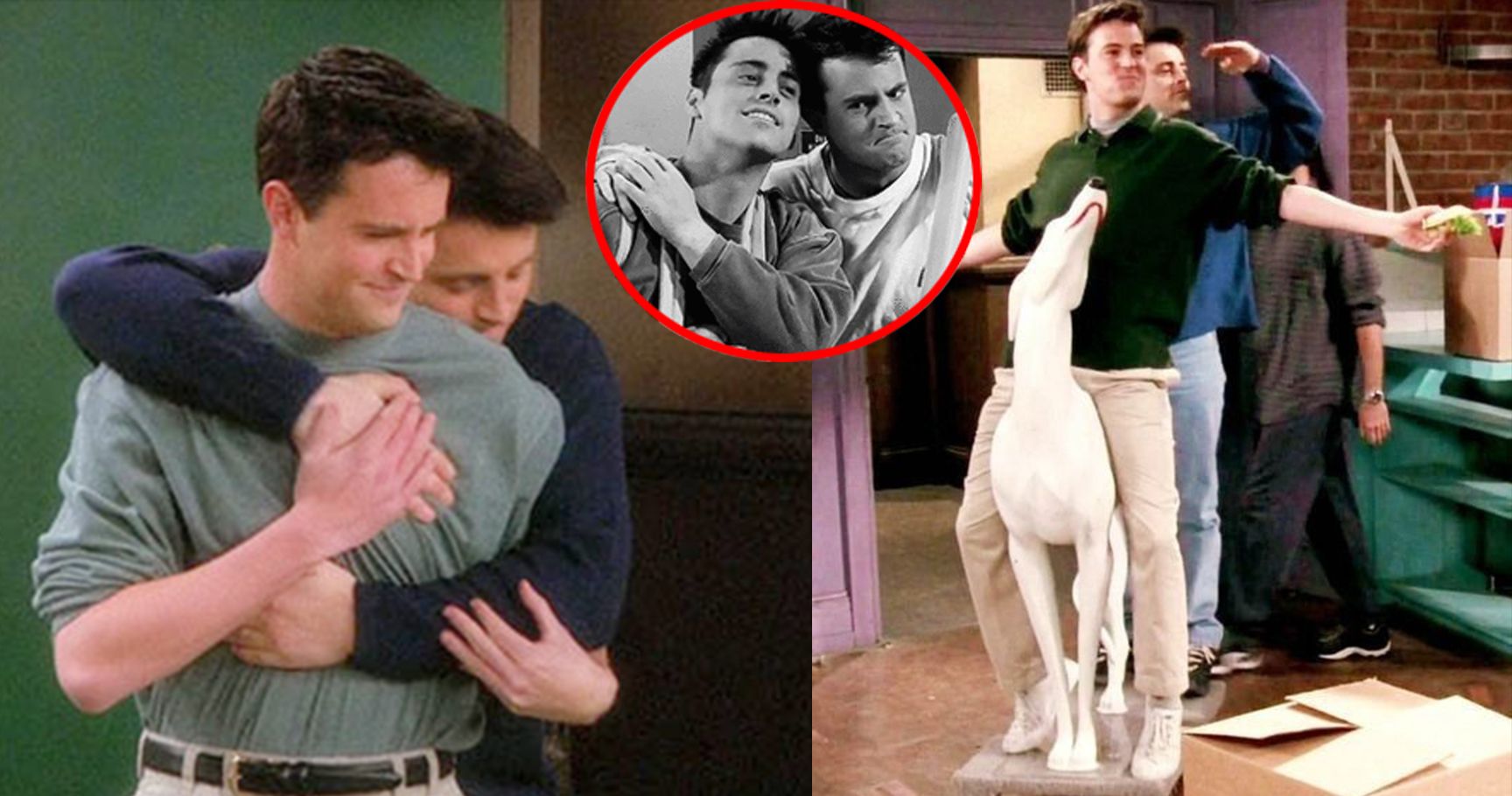
Bromances

Image result for joey and chandler

http://time.com/4978727/bromance-male-friendships/?fbclid=IwAR0mEzMuwc5TPUykJ4Ha_ReesfrYzEexWR_1bZWJNUoUMfRWyd7xLLBjL0U

This article explains that men are more satisfied with their male friendships than with romantic relationships. The data is still very new and they need to conduct more research but even out of the group they did interview I thought it was really interesting that the men felt like this. They said that they feel like they need to be manly around their girlfriends. I'm really interested in knowing why that is. Are they self-conscious about it? Is it more specific to just them and their girlfriends are expecting them to be that way? Are men feeling too much pressure by women to be manly or are they projecting that feeling? Lot's of interesting stuff to think about.

Men pay a steep price when it comes to masculinity


Men pay a steep price when it comes to masculinity


Men are seen as competitive, brutal, fierce and they are told they need to be all this if they want to be successful in life, at work and at home. They are taught from a young age that men are the breadwinners of the house, but what happens when the roles are reversed, and they are the homemakers? When they are the ones dressing their kids and taking them to school? When men do the chores that a woman would usually do they are seen like something out of the ordinary and it makes sense because they are breaking barriers but it is something that should be done by both parents not just one.

Alia E. Dastagir in an interview with Warren Farrell, known as the intellectual father of the focus on "men's issues," wrote the book The Myth of Male Power, the bible of the men's rights movement” reported that “Every society that survived, survived based on its ability to train its sons to be disposable, " Farrell said. "Disposable in war, disposable in work — on railroads or oil rigs — and therefore indirectly disposable as dads. And in order to get men to be disposable — you couldn't get a man to be willing to sacrifice himself if he got in touch with his feelings — we had to disconnect men from their feelings and therefore who they are.” Have the tables turned and now the men are the ones being discriminated? You decide.

Embracing Masculinity of All Ethnicities


In this blog post, I will describe how masculinity is displayed in one of my favorite movies, Departures, and compare how it is displayed in Western culture. It is commonly known that in Western media, Asian women are hypersexualized and Asian men are typically cast as thin, effeminate, nerdy, or "funny" roles. It is not often you see an Asian man as a main protagonist in any films produced in Western culture.

One day, for my World Religions class, my professor assigned us to watch one movie from a list that she assigned us. Most of them were documentaries that I didn't think looked very interesting, but one among them was an actual movie. This movie has won awards and was about a musician, so I figured maybe it would be enjoyable. That was an understatement. This movie takes place in Japan and follows a protagonist, Daigo, on his journey through getting kicked out of an orchestra, onto becoming an undertaker and exposes the beauty that can be found in departing with the dead. The first thing I noticed was how none of these actors seemed to be type-casted. They were given different kinds of roles; tough, vulnerable, smart, etc. There was no kind of masculinity or lack thereof being forced upon any of the characters. The assignment for my class was to note the cultural differences found in the movie and Western culture. Aside from the lack of racist casting and emasculation of Asian men, I also noted the bath-house that was featured in the film. There was a men's side and a women's side, and it was commonplace for men to be naked and bathe next to other men. There was no hint of being uncomfortable or homophobia when men were bathing naked next to each other. This is a stark difference from Western culture where if a man stands in the urinal next to you, he's suddenly assumed to be odd or gay, because there is such a fear of masculinity being shattered when other men are in too close of proximity. Atop of the differences from films that are produced in America, Departures really is just an all-around great film. It is in Japanese but if you don't mind reading subtitles, it is more than worth the time it takes to watch it.