Wednesday, November 10, 2021

Healthy Masculinity: Redefining What It Means to Be Masculine

 Healthy Masculinity: Redefining What It Means to Be Masculine by Taneasha White, published in PsychCentral on November 2, 2021. 


"It’s true that the way we’ve consistently seen masculinity expressed is often connected to harm — like sexual assaultdomestic violence rates, or homophobia — but there is also room to talk about what’s been missing from the conversation: healthy expressions of masculinity."


Monday, August 9, 2021

Communication in Male Friendship and Its Shortcomings

 *trigger warning for s-xual assault and r-pe.

In 2016, Donald Trump was elected president. All I could think about was the grotesque audio of him speaking to Billy Bush about women and his sexual conquests with them: “You know I’m automatically attracted to beautiful — I just start kissing them. It’s like a magnet. Just kiss. I don’t even wait.  And when you’re a star, they let you do it. You can do anything. Grab them by the p---y. You can do anything” (2016). Not once does Bush object to the lewd comments being made, and when this audio was leaked, many dismissed the actions on account of simple “locker-room” talk. Society has not only rationalized but excused men’s objectification of and domination over the female body in casual conversation because “boys will be boys.” In her section on masculinity, Susan Shaw and Janet Lee write “In mainstream contemporary U.S. society, the “regimes of truth” associated with masculinity… revolve around potent sexuality and an affinity for violence: the machismo element. Machismo involves breaking rules, sexual potency contextualized in the blending of sex and violence, and contempt for women and femininity (misogyny)” (104). When men are not held accountable and continuously rewarded for, or in spite of, their detrimental socialized masculine qualities, they are emboldened to continue with their ways, growing more comfortable and powerful in their privilege. 


Your Friends and Neighbors, a 1998 film, explores this masculinity and how it is referenced in conversations between men. In the film, three men discuss their sexual lives while three women do the same, however, what we're left with is a brutal and tormented depiction of sexual isolation. One of the toughest scenes to watch exemplifies this, as one character Cary, the most sexually deviant who consistently focuses on sex and is verbally violent to the women he wants to have sex with, describes his “best f-ck,” a question frequently asked throughout the movie. He details a time in his senior year of high school when he and his male friends gang- r-ped a boy named Tommy, though Cary claims that as he went last, he felt Tommy and him share a special connection. His two “friends” listening to this story, though shocked, do not express any outrage or disgust at Cary’s actions, simply describing it as an incredible story. The film, written and directed by Neil LaBute, showcases the toxic machismo ideals in men and how freely they are expressed amongst other men. Cary is never held accountable and is actually praised for his despicable notions of sex and dominance over women, and even men in regards to sex. While the film does operate as a hyperbolic immortality tale, it isn’t too hard to suspend your disbelief about the disturbing ways men can communicate about women and sexual politics. 


But what about the general state of male communication? What do men talk about and how do they talk to each other? Well, I decided to get into the personal and ask my boyfriend some questions about what he's observed from his own experiences with male friends. He stated “I feel like a lot of male friendships in my eyes don’t involve a lot of meta-analyses. They don’t talk about their relationship, they just kind of exist together and I feel like, without that kind of space to talk and set boundaries, it feels like it's almost devoid of a safe place to talk. You don’t wanna start that conversation because of the toxic masculinity fear of talking about emotions, for me, that feels present. That looming feeling of ‘don’t step out of line’.”

 If men don’t feel comfortable speaking about anything confrontational for fear of being ostracized by those who uphold the status quo, then they simply won’t and important conversations will be left unsaid. And this is a tremendous shame. Men, for the sake of themselves and greater society, should be able to engage in genuine and honest friendships that challenge them to be better people. Men deserve healthy friendships. 

In an article for The Atlantic titled The Power of Intimacy in Male Friendships, Julie Beck interviews two friends to discuss the significance of their relationship. In one installment, Mitchell talks about his friendship with another man named Judo, stating: “I get so much out of our friendship because I am challenged by the contents of our conversation; I’m challenged by the way you choose to think about a problem. I’m challenged by the things that you expose me to.” To challenge your friends, not only in their sexual politics but in everyday life, enriches both people's capacity for empathy and human connection. But, men are not taught to do this. This sort of relationship is not being cultivated or encouraged among young men and what we are left with is a man like Donald Trump, accused of 26 counts of sexual misconduct, being elected President of the United States. 

Why does society choose to excuse disturbing male behavior in conversations with other men when instead we could be accentuating accountability and championing positive male friendships. This emphasizes why feminism is not solely meant to benefit women, but also men, creating a world where women are safe to live, and men are safe to talk. 


Sources

Trump recorded having extremely lewd conversation about women in 2005

https://www.washingtonpost.com/politics/trump-recorded-having-extremely-lewd-conversation-about-women-in-2005/2016/10/07/3b9ce776-8cb4-11e6-bf8a-3d26847eeed4_story.html


How 1 Friend Can Change the Course of Your Life

https://www.theatlantic.com/family/archive/2021/06/intimacy-male-friendship-change-life/619290/


The 26 women who have accused Trump of sexual misconduct

https://www.businessinsider.com/women-accused-trump-sexual-misconduct-list-2017-12


Gendered Voices, Feminist Visions: Classic and Contemporary Readings

Susan M. Shaw,  Janet Lee


Monday, December 7, 2020

Successful Manhood

    “What do you do?”, “What career do you have?” these questions are some of the first things asked when people are introduced to each other, especially men.  The competitive nature of industrialized, individualistic culture in America has created an unobtainable standard of “success”.  But what is success if you aren’t happy? 

    For men, their masculinity is almost exclusively their career.  The breadwinner expectation has evolved into a constant climb to the top of the social hierarchy.  This has led to 80-hour work weeks, high divorce rates, and high rates of male suicides.  Men are now literally and metaphorically killing themselves to be better than the next guy all in order to be “successful”.

    What if men flipped the script? What if the first thing people asked each other after being introduced was not “so, what do you do?” but rather “are you happy?”.  In my opinion, that should be the measure of success.  If a man can come home to either his family, or if he chooses to be single, and be truly happy, I believe that men’s mental health and relational health would be much healthier.  If you are a man, I will leave you with this thought: Does being a successful man mean being successful on other’s terms or on your own?


No Homo Bro

    “But no homo” uttered the teenage boy after expressing his gratitude towards his male friend for being there for him after he lost both his parents.  After all this boy has been through, he finally became vulnerable enough to express his feelings towards his friend, but he still has a seed inside of him that any acknowledgment of emotion would mean that he has is attracted to men.  

    Modern men face a treacherous outcome in their same sex relationships.  Feelings are feminized and misunderstood to mean that the man expressing the feelings has a sexual attraction to the other. This has left men with stoic, cold, and shallow friendships with other men.  Furthermore, the phrase “no homo” deepens the segregation between heterosexual and homosexual men.

    The taboo that straight men have created around homosexuality has not only severed their own relationships with themselves but also ousted homosexual men.  When a man must assert that he does not sexual preference towards other men due to one action or another, it creates a sharp divide.  In the man’s mind, after saying a comment like “no homo”, it is translated as oh no I am not gay, that would be a bad thing and I am not that.  What happens when heterosexual men meet a homosexual man? To me, it seems that there would be a tension as if the homosexual man is completely unlike them and somehow a “bad” or “weird” man.  When saying such as “no homo” are eliminated from men’s verbiage, maybe it will lay the ground for authentic man to man friendships and furthermore, create a climate for inclusivity of homosexual men into heterosexual men’s circles.  


Be a MAN

    Have you ever heard this expression before?  Maybe you have heard it said to a friend, a son, a boyfriend...heck, maybe you have even said it yourself.  Being told to be “a man” materializes the societal stereotypes of manhood including, but not limited to, being tough, strong, successful, smart, stoic, and the breadwinner.  However, do we ever stop and ask ourselves what happens to men when this phrase is uttered?  
    For centuries, men have been put in this so-called “man box”.  Inside of this box is everything a man “should” be, at least according to the historical archetypes.  In books, movies, and advertisements, men are portrayed as dominant, unrelenting, unemotional, athletic figures.  When a man’s life is constantly inundated with these images from the popular media, it is difficult to deter these expectations of who he should be and live up to be.  
    Furthermore, the phrase “be a man” further suggests the firm dichotomy between male and female, implying that there is no grey area.  The firmness of the perceived boundary between feminine and masculine determines the polarization of the two.  Men are more drawn to traditionally masculine qualities as means to solidify their identity as a man. It is my opinion that men should learn at a young age that being a man doesn’t hold them to only masculine characteristics, instead when men learn to embrace their femininity they are even more “manly”.  Imagine a world where men are not driven strictly to be what the man box tells them they should be but rather who they are authentically and holistically. 

Friday, November 13, 2020

Surveilling the Male Body

Typically when we hear the word “objectification,” we think of the objectification and sexualization of women in the media. From any major fashion advertisement, like the Alexander Wang ad below, to Telenovelas and soap operas, women’s bodies are constructed as a site for the viewing and pleasure of others. We have seen the negative impacts of objectification on women, like the growing number of women diagnosed with an eating disorder or exhibiting signs of disordered eating. But, with such a high focus on the objectification of women, have we lost sight of the prevalence of the objectification of men’s bodies, too? 

Especially with the growing use of social media among both genders, the objectification of men is at an all-time high. Through the study of male body builders on Instagram, it was found that these men objectify their bodies in order to reach an aesthetic ideal, one that is frequently portrayed on social media. Men, like women, are learning to value their bodies based on the pleasure and viewing of other people. But, if the objectification of men is truly on the rise, why is it that we don’t hear as much about it as we do of women? It seems to me that we are stuck in the mindset that women are objectified and men do the objectifying. How could it be the other way around? I think our society needs to reevaluate the beauty standards it holds for both genders in order to really understand the impacts that objectification has and how we can improve the lives of all through the elimination of unrealistic beauty ideals.


The Art of NOT Being Feminine

The masculine/feminine dichotomy is one that is so ingrained in our society it seems rare that it is ever challenged. But, the most peculiar aspect of this stark difference between gender identities is the idea that being masculine, in part, means NOT being feminine. In fact, being masculine, as our society defines it, often includes putting down women and anyone who is not a heterosexual, masculine man. The implications of this anti-feminine identity are far-reaching and have negative impacts on pretty much anyone that doesn’t embody a hypermasculine identity.


We often wonder why women are disproportionately the victims of interpersonal violence. When we take a closer look at the foundation that men’s core identities lay on, it is not as surprising that men are mostly the perpetrators of violence, and women the victims. From a young age, boys and girls receive different messages about what is acceptable behavior. This starts in schools, where teachers reward aggressive behaviors in boys and reprimand them in girls. Similarly, through adolescence, boys are lifted up and praised for “sexual conquests” while girls are called a “slut” or “whore” for being sexually active. No matter what life stage it is, girls’ actions are viewed negatively compared to the same actions in boys. Even more astonishing is the fact that boys’ rewarded actions often come at the expense of girls’ mental and physical well-being. This, in part, explains why women are disproportionately the victims of violence and men the perpetrators of it. Much of the blame is to fall on society for socializing boys and men to believe that masculinity has to do with not being feminine. We must change the way we think about masculinity in order to save femininity and the women that are victims of our men’s actions, as well as the men who fear straying from the hypermasculine identity. 

Why Don't Men Cry?

Growing up, we are taught that girls are emotional and sensitive, while boys feel no emotion and have a heart of steel. Not until growing up and studying gender studies have I realized how harmful this concept is, which most of our youth are brought up to believe. The concept of the “man box” has jumped out at me throughout this semester’s studies because it finally explains, and labels, why men don’t cry. Not only why they don’t cry, but why they seem to “care less” than women in heterosexual relationships, why people use “gay” as an insult, and why calling a man “weak” is a huge blow to their ego and their identity. 


We can’t say it’s men’s fault that they are hesitant to show their emotions or be anything but hypermasculine and heterosexual. In fact, we have society to blame for that. Starting from a young age, boys are socialized in a way that teaches them that ‘man = strong’. The “man box” incorporates tons of other “masculine” traits, like strength, muscularity, dominance, superiority to women, toughness, and anger. It’s no surprise that when men grow up, they act out these concepts of masculinity that they were taught their whole lives. To make matters worse, men fear breaking out of this stereotypical male identity because they are taught that they will face ridicule from their peers, and even violence, for not conforming. Men have admitted that the fear of straying from the “man box” is what keeps them conforming to masculine stereotypes for much of their lives. 


It’s a sad reality that our men feel pressured to live up to a stereotypically masculine identity because of the forces that tell them they must do so. The fear of ridicule and shame from their peers is often what keeps men adhering to “man box” qualities which only furthers the belief that men must fit those criteria. When will men feel comfortable crying publicly? It’s hard to say, but one thing is for certain: it won’t happen unless society becomes comfortable accepting men for who they really are. 

Wednesday, November 13, 2019

Some Thoughts on Surviving R. Kelly

We are a product of the way we are brought up, as are our parents and the generations before them. As I am in the midst of the Netflix documentary, ‘Surviving R. Kelly,’ this concept has become relevant, even in relation to celebrities. I specify his role in society because we so often put celebrities on a pedestal that makes them seem invincible, without reminding ourselves that they are simply people, with flaws like the rest of us. Though I have heard bits and pieces of the story, I am just now truly finding out how much of a menace this person is, and my heart goes out to every single individual hurt by his actions, poor choices, and predatory behavior. It is now within my understanding that R. Kelly is, himself, an assault survivor. But trauma does not translate to being an excuse for the ill treatment of others. I think that the most striking piece of this whole scenario is the existing power dynamic between Kelly and the young girls he preyed upon. This is an age old dynamic that is abused over and over again by men in high positions, trading fake promises for sexual acts from underage girls. It is also difficult to stomach all of the red flags that have popped up over the years, such as his marriage to fifteen year old Aaliyah. R&B culture and racialized masculinity met in a way that allowed individuals to turn a blind eye to the situation and make excuses. 

It's for a Friend

I work at an adult retail store and have, especially as of late, been in some very interesting discussions with customers, specifically cisgender men. My job presents itself as a safe space and it is within my duties to assist customers in product selection, which requires some digging on my end to receive that piece of personal information from them. Of course, there is the individual who comes in looking for a gift for a friend, and that ends up being a legitimate motive to their visit. But most of the time, when I am met with that awkwardness and uncertainty, it is clear to see that they are hiding behind this imaginary friend in order to not be judged by my coworkers and myself. In my own experience, this scenario rarely plays out with feminine presenting individuals, and I feel that this says a good deal about our current cultural willingness to let women explore with toys and new ideas (so long as they are not having too many partners – heaven forbid). Meanwhile, men are clearly under the impression that there is shame in experimenting solo/seeking new sensations/traveling away from being focused on penis-in-vagina sexual acts. As someone who, mostly unintentionally, does not have close friendships with cisgender men, this situation initially presented me with a great obstacle as I was not sure of how to properly assist customers falling into this group. It has become a goal of mine to make the men that enter my workplace feel comfortable, free, and unashamed. 

Be a Man, and Make Your Dad Proud


Upon searching for images pertaining to masculinity on different search engines, I stumbled across the attached photo. At first glance, it certainly seems like a harmless image of a father and son bonding, likely in a situation where the son is mimicking the dad as kids often do. But the longer I examined the image, the more it bothered me. Perhaps I am just fundamentally anti-gendering children, or at least projecting gender roles and ideals upon them. But something about equating manliness with muscle mass is outright problematic. I feel strongly that alluding to this idea of brute force aligning with manhood is the root of violence against women, and people in general. By encouraging young boys to flex their muscles, toughen up, and not ‘act like a girl,’ we instill in their young, impressionable minds that a) they must be muscled, strong, ferocious creatures to be real men, and b) that women and/or anyone who does not fit their idea of masculinity should be seen as inherently less valuable. Parents will continue to bring their children up in whatever which way seems appropriate to them, but I do hope individuals will also focus on compassion training and emotional coaching with their kids. Crying, failing, getting hurt, and so on are all part of the human experience, and young boys should not be enforced to tiptoe around those facets of life.

Tuesday, November 12, 2019

Who gets to decide what a man looks like?


I decided to do a simple google search on the word ‘masculinity’ in order to see what this term represents on a worldwide scale. I stumbled upon this image, and had to stop for a moment to take it in. Something about it makes me uncomfortable. I suppose it is the muscular outline, suggesting that there is a specific body type that exudes masculinity and manliness. That, coupled with the fact that the individual in the photo is already male presenting, wearing a blue button down and sporting a face with thick facial hair, has painted the picture regarding exactly what/who we associate with being manly or masculine. This is troubling for two reasons. First, it sets an expectation for cisgender men to appeal to, and it is likely to take a toll on their psyche if/when they fall short of these often unattainable standards. In this context, we can equate large muscle mass with the cisgender woman’s struggle with maintaining a petite waist. These are looks that some individuals may be inclined toward, but it should certainly not be considered the norm when many people cannot train their bodies to look like that. Second, this image of masculinity can be so harmful to trans individuals, especially those who are beginning transition. To present the idea that this image represents what a man looks like can encourage dysphoria and take away from the validity of a trans man’s experience, if they are to compare themselves unfairly. 

Monday, November 11, 2019

Acceptance

What is the correct practice of teaching acceptance? I believe it starts at a young age and has to be conditioned all throughout ones childhood. As previously mentioned, minding your own business is such an important concept to grasp at. I don't think there is a clear path to teaching the lessons of equality and acceptance however I do believe we owe to future generations to come to not preach bigotry. I think a discussion needs to be had on how to simply not say anything if you don't agree. Not to be completely complacent but in the realm of not being disrespectful if you weren't disrespected to begin with.

Minding the Business that Pays You

I will never understand why people just can't mind the business that pays them. Speaking from a place of experience, so many people were so concerned about my coming out and it had nothing to do with them. So many people had so much to negative stuff to say and majority of which, I had never spoken to or knew. I'm not sure if it has something to do with people feeling as tho they always have to put the underdog down but it was very annoying to know so many people had so much to say about me. I think that we as as society have strayed away from the right to privacy and freedom of expression. It's almost a pain nowadays to be yourself in a public environment and I really wish it wasn't.

Told to Stay Quiet

For as long as I can remember, I've always been told to hush about my feelings. Within the black community, it's very taboo to speak on how one emotionally feels. When doing so, it's seen as a sign of weakness and your masculinity is questioned. What real man cries or shows emotion? You're taught from a young age to be a brick wall, to be seen but not heard. Because of this, I feel as though many black men suffer mentally later in life because they've never been allowed to express themselves.
Childhood trauma is also something that has been swept under the rug. Black families are more likely to turn down stories of abuse before they are to shun the family molester unfortunately and it's been seen in the public eye as well. Monique Hicks, a well known comedian, has suffered in the public as she has let it be known that her brother was her childhood molester. Her family denied it for the longest until a paid interview with Oprah of an undisclosed amount gave him platform to admit his wrong doing. This just goes to show that people are to turn away in the face of negativity. Thoughts?

Life From Both Perspectives

I had come across this video in a previous class. Paula Williams is a transgender woman who lived her whole life as a man knowing she wasn't living her truth. She recognized the differences of how she was treated both a man and after her transition into a woman and it was quite astonishing. I think something that really stuck out to me was her story about the airplane incident. Woman don't get the same level of respect that men do and its quite shameful. This story was a true representation of that. Give the video a watch and let me know your thoughts.
https://www.youtube.com/watch?time_continue=18&v=lrYx7HaUlMY&feature=emb_logo

4 Year Old & Rainbow Nails

Alicia Keys is a well known artist and a proud activist of the LGBTQ+ community. However most recently, she allowed her son to get rainbow nails at salon. He's only four but his perception of the world is very much alive. He told his mother that he wanted to take them off as soon as he got them because he knew he would be judged by others. This really bothered me because no four year old should have to concern themselves with the opinions of others. He should be allowed to act freely and carelessly because the world should not be looking down on him already. Alicia then went to rant on social media about her frustration as a mother knowing her son is already being judged by the public. The comment section quickly filled with hate comments and it just shows us that there has been no real progression in the age of acceptance. Take a look below, link to the video is attached.
https://www.instagram.com/p/B4q8hydBZT8/?utm_source=ig_web_copy_link

Sunday, November 10, 2019

The Easy Acceptance of Men in Women’s Spaces


As industries like makeup artistry grow larger, it’s interesting to watch how easily men and male make up artists are welcomed and accepted into this space. The make up industry is particularly interesting because while it’s traditionally a feminine area, men have always existed in makeup. It seems to have grown far more prominently with the rise of social media and the surge of accessibility as of late, though.  

Is Violence Embedded in Our DNA?


Another great piece from Sapiens.  This article examines whether humans are genetically predisposed for violence. For me, this article provides an interesting look into whether human males are truly genetically predisposed for violence. The author of the article provides several viewpoints on both sides; there are anthropologists who believe that violence and warfare come from culture and this is not something males have evolved with. Others argue that it’s an evolutionary advantage men have, that there are anatomical differences between men and women that point to this. A point that stuck out for me particularly is that there are cultures that have existed throughout history, including currently, that have not had war at all. Anthropologists look at our closest animal relatives, apes and monkeys, for an idea into hour our early hominid ancestors lived before we fully evolved into Homo sapiens, describing the ways chimpanzee society works, with ultra-aggressive male chimps intimidating the males of smaller groups away, and poses this as a possible look at the behaviors we lost and adapted from our pre-human ancestors. It is interesting to me how quickly the article looks at males of the species for violence and the answers behind it, though.


Can Discussions About Hypermasculine Cultures Exist Without Women?


It occurs to me that a lot of women have given their opinions and experiences with hypermasculinity, and I wonder if this sort of conversation ever exist without women? One would think that a conversation about male culture should come from men to other men, but I find it hard to separate how this impacts women. I do think there are some aspects that should allow for men’s experiences at the forefront, obviously with things like male sexual assault and male survivors of domestic violence, but with how much of a negative impact a lot of male dominated culture has on women, it’s truly difficult for me to find a way to separate a female look on it.

A Thought on The Vulnerability of Young Men


To preface, I work in a restaurant and while they can be hit or miss with being a totally male dominated workplace, they’re still hard for women to work in regardless. I feel it’s important to establish that I can only look at masculinity from my own more feminine perspective, but I feel as though in this situation, it’s an important bit of context. At my workplace, we have a nineteen-year-old dishwasher/server assistant I’ll name Andy. I was recently alerted by another male coworker that Andy felt so pressured by the other male staff in the kitchen to lose his virginity that he hired an escort. I was presented this information about a coworker I hardly know by another male coworker who seemed to think this was funny. I was taken aback and uncomfortable by this information. Why did this man this this was funny? He clearly pitied Andy. He often participated in joking with other male staff about Andy’s inability to get a girlfriend. It’s so heartbreaking that there are situations like this that occur regularly, that young men feel so pressured by others in their social circle to force things like having sex with someone for the first time. Toxic masculinity in this environment seeps into every interaction some of these men have, some who work together almost 40 hours a week together. It’s hard to watch Andy turn from a quiet, calm kid into a loud and aggressive man. It’s hard to hear him speak openly about this escort he hired, using derogatory language about her. Toxic masculinity seems to prey on the vulnerability of young men and it’s hard to find ways to help curb it, especially as a woman in an environment that is already so unwelcoming.

Bisexuality Among Men


In an episode of The Good Place, one of the more popular shows of the past few years, the main character declares, “More men should be bi. It’s 2018.” It seems that bisexual has become a label associated almost exclusively with women, but why? I believe the most accurate answer would be that, for men, queerness represents a loss of social privilege that is not the same for women. For men, being with another man is a sacrifice, a loss that cannot be taken back.

Women, on the other hand, are assumed to have less to lose for having romantic and sexual relationships with other women. Some people even think that women “experiment” on purpose for (male) attention, which is a laughable idea in a society where people are still disowned, beaten, ostracized, and worse for being queer.

Nevertheless, when bisexuality is perceived as experimentation and an impermanent label, women have more leeway to walk that divide. But men aren’t allowed to “experiment” with other men. When a man gives up the social privilege afforded by being straight, there’s seemingly no going back, so he has crossed that divide for good. This phenomenon is tied to the inextricable link between sexuality and gender and the reason why girls can be “tomboys” while men are not allowed to experiment with femininity; women “trying on” the social privilege of masculinity is fine, while men are forbidden from “lowering themselves” to femininity. Likewise, the feminization of queerness “soils” masculinity for good.

Many queer spaces struggle with those who believe that bisexual men with female (or even perceived-as-female) partners don’t “count” as queer. There is a rejection from both sides: heterosexual society believes the man is lying about his love for the woman because he’s gay, and queer society (at least, some groups within it) believes he’s lying about his queerness because he’s in a “straight” relationship.

The fact of the matter is that many people cannot comprehend the capability of being attracted to multiple genders, namely because they perceive two genders as two entirely different worlds. The truth, of course, is that gender is a boiling soup and we are all the frogs who’ve been sitting dumbly in the water as the temperature rose. Thus, I listen to the advice of Eleanor Shellstrop: “It’s 2018. Get over yourselves.”

An anthropological look at gym culture.


This article is from one of my favorite Anthropology newsletters, Sapiens. In this article, Anthropology professor at the University of Notre Dame, Dr. Cara Ocobock, describes the culture surrounding powerlifting and gyms. Ocobock describes the hyper masculinity of the scene and her initial negative experiences, but how she ultimately gains the respect of other regulars, all male, and how this impacts her. I think this shows an interesting anthropological look into a heavily male dominated space and how a woman can gain access, but how this culture can change her in ways that resemble the toxic masculinity present.

Overlap: Masculinity between Queer Women and Transgender Men

https://youtu.be/2utditm0ow8 
https://youtu.be/2V09C98Xt7Q

These two videos touch on masculinity outside of cisgender men. One discusses masculinity of trans masculine people and the other discusses masculinity of butch women. I think the most exciting thing for me is to see that overlap especially since I don't cut ties from the point in which I considered myself a woman and still had the same gender expression after coming out as nonbinary. Feel free to check these out!

Rapper T.I Reveals He Takes His Daughter To Doctor To Check On Her Hymen Yearly...

On the podcast show "Ladies Like Us", rapper T.I was recently interviewed and asked if he and his 18-year-old daughter have had the 'sex talk'. He admitted he actually takes it a step further by taking his daughter to the gynecologist every year to make sure her hymen is still in-tact to confirm her virginity. He even went on to verify to the world that as of her 18th birthday, her hymen is still in-tact. Honestly, I am not even sure where to begin with this. First of all, this is extremely intrusive and embarrassing for his daughter to have her personal and medical information broadcasted to the public in this way. Second of all, doctors have confirmed that a hymen can be stretched from a variety of activities other than sexual penetration such as riding a bike or tampon insertion. This is a prime example of misogyny and not to mention this ideology perpetuates a toxic masculine culture amongst fathers. The act of being forced to allow your father to view your gynecological information just to find out if you are a virgin is a violation of the young woman's privacy and is also a very abusive way to be involved in your child's health. This can affect the daughters mental health by having her feel like she doesn't have power or control over the choices she makes with her body. If daughters having sex is really a concern, I think instead of checking on daughters 'virginity' they should be making sure their daughters are educated on sex health so they can make better and more empowering decisions. When women learn about the power they have over their own bodies they are more likely to make safer and smarter choices when it comes to choosing their sexual partners. From T.I's perspective I think his intention is to protect his daughter from men like himself. Being a 'man' in a man's world, his perspective and ideology about women is clearly misconstrued which makes him believe other men might have the same predatory perception of women. However, it is not excuse to violate his own daughters privacy and I hope the backlash he has received over this topic makes him re-consider his actions for his daughters sake.

Gendered Marketing: The Economics of Gender Roles

https://youtu.be/3JDmb_f3E2c 

I remember when I first saw this video that it opened up to me why there is so much backlash from some companies when gender neutral marketing and products are brought up by competitors or even some consumers. Have there always been "things for boys" and "things for girls"? Watch the video and see what you think! (My personal thought is absolutely not to the question I asked).

Social Media Outrage Over 'Always' Making Products Trans-Inclusive.

The Shade Room: 'Always' Announces Removal Of Female Symbol To Be More Transgender Inclusive

As I was scrolling through the instagram abyss a few weeks ago, I came across a friends story who re-posted an article written by the popular gossip blog "The Shade Room". I typically ignore stories posted by this gossip blog because the content simply doesn't appeal to me. The title of the article read "Always Announces Removal Of Female Symbol From Its Products To Be More Transgender Inclusive", and my friend re-posted it with her own comment saying "This has gone too far! They can't even get their period!". After clicking on the post and scrolling through the comments, my friend was far from alone in this sentiment. People were leaving a range of comments from plain ignorant to full homophobia. One comment even said "What are they going to do, put ketchup on their pad to feel included??". I usually try to ignore the ignorance I see on the internet but this time I really felt the need to inform people and try to come some understanding. I was shocked to see how many people still don't understand what it means to identify as transgender. I responded back to my friend informing her that Always is not necessarily trying to be more inclusive for people who have transitioned from male to female and now have a vagina without the periods, they're probably trying to be more inclusive for non-binary folk and people who identify as male although biologically still get their periods. This led to some more back and forth between us, where she still ended up stuck in the notion that to be transgender means you have fully gone through the surgery to transition. However to identify as transgender doesn't specify at what point of your transitioning journey you are. You may love your biological body but still identify as a different gender or you may not identify with any gender at all. Someone can even fully transition to male or female by getting the surgery and choose to drop the 'trans' and identify as the gender they feel they are, therefore they are no longer trans they are just male/female/ or something in between. Since I am constantly learning about gender and identity, I forget how rigid our society still is when it comes to the concept of gender and sexuality. Seeing how people were outraged and confused about gender identity makes me wonder what I can do to help inform people and open more minds around me.

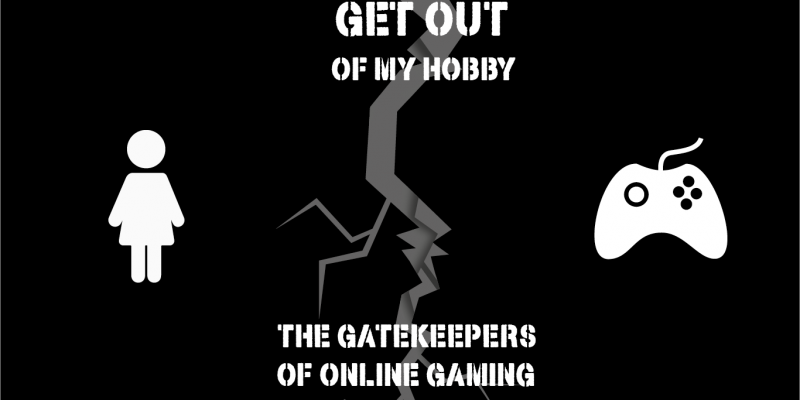
Get Out of My Hobby

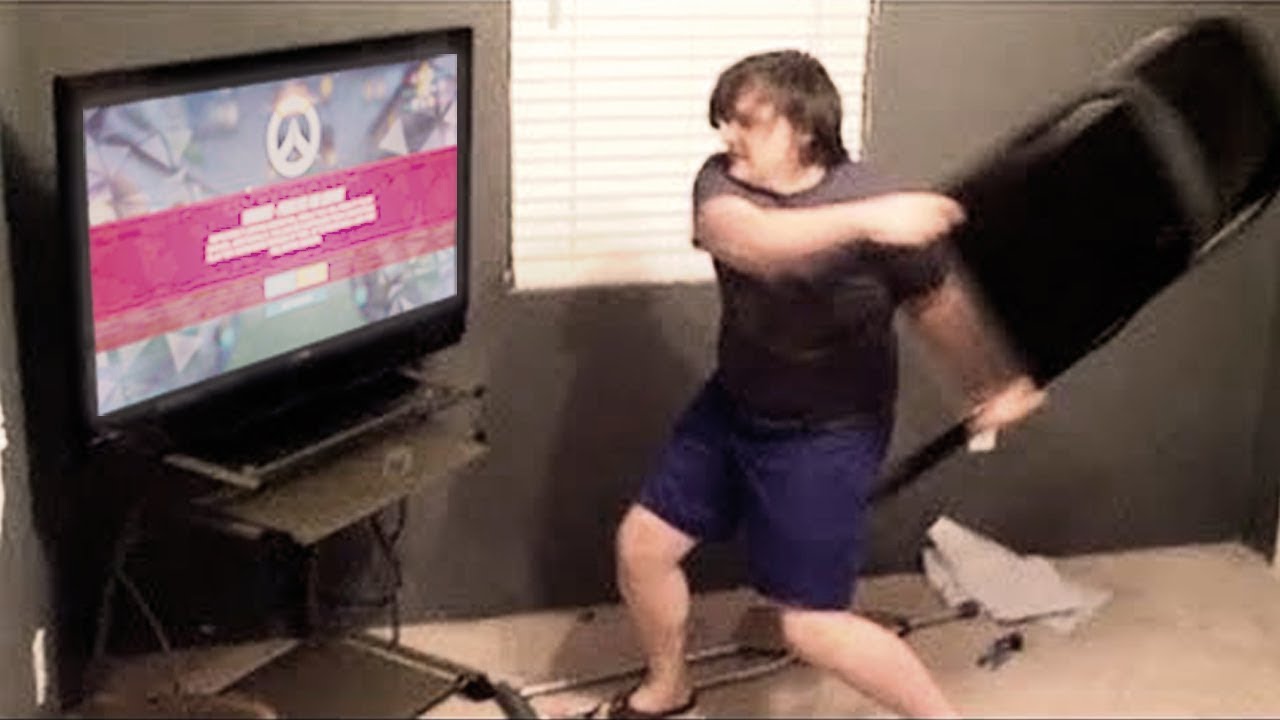
Video games have always been a controversial subject for toxic masculinity and how it plays a role in encouraging toxic behaviors. I'm a female and I have been playing video games for most of my life, and many girls like me do not have issues with rage during video games as much as men seem to. Currently, I prefer to play games that do not require the internet because of the amount of abuse that I tend to get when I do play with others online. 
The population of online gamers is predominately male, and no matter how well or badly I do in the game, there is no winning for a "gamer girl." If I win the game, I'm a "Whore" and I must have cheated. If I lose, then its obvious that I'm a girl because I lost and I'm not supposed to be good at playing games. There have been many who will also attempt to give me pointers about how to play the game, because they assume I don't know anything about the game even before starting it. 

I do get the occasional other girl who I get to play with and it is refreshing since I tend to not get verbally abused by them. That's not to say that there isn't a single decent guy who plays video games without lashing out, it is just very RARE. Ultimately, I don't think that the video game itself has much to do with these toxic behaviors towards women who game, as much as it is the community who enforces the belief that women shouldn't play video games because it is a man's hobby.


Justin Baldoni's TED Talk: Why I'm done trying to be "man enough"


I highly encourage you guys to watch Jane the Virgin’s Justin Baldoni’s TED Talk. He eloquently speaks on masculinity and his experiences with it. The points he brings up perfectly aligns with what our texts talk about. He brings up the concept of hegemonic masculinity and how it has affected him growing up. Justin mentions how masculinity is socialized to be the opposite of femininity. So to be a “real man” one has to reject embodying any feminine qualities or risk being socially exiled. Justin mentions the scripts we have been taught to abide by and how these scripts have made him feel conflict within himself. He realized after 30 years that he was tired of being a kind of man that he was not. He challenged other men to explore deeper within themselves: to redefine what it means to be tough, brave, and strong. He emphasized that is okay to be vulnerable and feel weak. It is acknowledging these feelings that takes their power away. Justin mentions a powerful quote that I have to share: “The world of humanity is possessed of two wings, the male and the female. So long as these two wings are not equivalent in strength, the bird will not fly." 

Again, I recommend watching this TED Talk and sharing it with men in your life you feel could benefit from it.

Raising Kids in the 21st Century


Raising Kids in the 21st Century

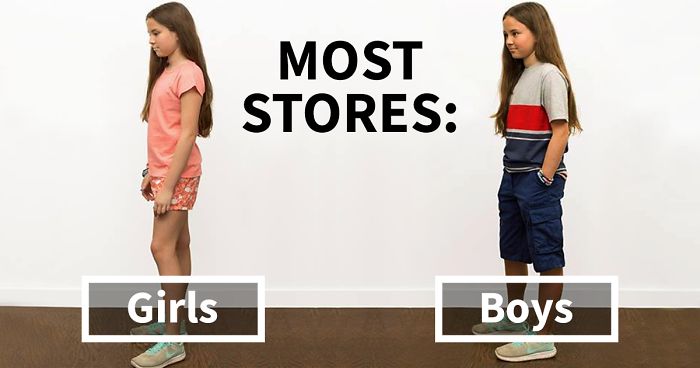
Image result for boys dressed like girlsImage result for girls dressed like boys

Growing up it was me, my parents, and my two sisters, and I was raised that girls don’t climb trees, they dress like girls, and don’t act like boys. My dad was very uncomfortable with his daughters climbing trees because he perceived it to be a boy activity and that was not allowed, but my mother thought it was fine because she loved to climb trees when she was young. My dad made comments when we were growing up that if he had a son, he would be allowed to date at a certain age, but we were not allowed to date. I knew this was wrong and I did not agree with it but that was what dad thought, it was how he grew up. Now that I am grown and have 3 children of my own--a mix of 2 boys and 1 girl (the youngest). My husband and I have tried to make sure that we make rules that are executed evenly among all 3 kids, regardless of gender. There are still struggles that we face with our sons and how they play and interact. For instance, we are not comfortable with the boys wearing nail polish. Our oldest would never dare to do something that could be mistaken for girly while our second son is quite confident in himself and would welcome trying some colors on his nails, even if for only a few minutes. While neither my husband nor myself think that either of them wearing nail polish would influence their sexuality; in a way, we are still very bound to the typical gender norms for items such as nail polish. I want our kids to grow up feeling loved, strong, and not held back by anything, including us. I feel especially strong about our daughter being able to defend herself and protecting herself from boys and life. I want our boys to be strong too, but I also want them to be able to talk about what they are feeling and be ok with expressing themselves and their emotions. We keep a very open dialogue with our children and encourage them to ask us questions about anything, but I still worry that we do not do enough to encourage them to be themselves, whatever that might be.

Raising kids now is different than when I was growing up. Maybe the way my dad thought was wrong, but it wasn’t against the norm of that time, nowadays it is. The way we are raising our children is a mix between what was normal during our childhood and what is acceptable today. Although our parenting style is more like days of old there is a mix of the newer style in it but it seems like some people do not agree with it. We are not progressive enough in our parenting to be accepted by today's standards and why does that matter. If we want our boys to be strong, competitive, play sports, and not wear makeup we are made to feel like we are not open enough in our parenting style and we are damaging our children. Why? Why can’t we raise our children how we want without being judged by our generation and the generations before us. If we parent too much and don’t encourage a more feminine side of our boys we are criticized if we encourage our boys to express themselves and cry if they need to, again we are criticized. Parenting in today’s times is difficult because there is such a variance of parenting styles and it seems like if you don’t belong to one than you are wrong or a bad parent. I want to be able to parent my kids in the best way that my husband and I see fit without being criticized for the way we do it. In a time of freedom and let people be who they want to be and accept everyone the acceptance seems to be limited to only those who think the same way and everyone else. I am proud of my children and pray that the way my husband and I have chosen to raise them will do them will not only today but in the future and will help them to be loving, kind-hearted, strong people.


I’m not saying raising boys is harder than raising girls, but I am saying it burns more calories


I found this meme to be quite right! I raised 3 boys before I had my daughter and I can say that the keep me much busier than my daughter.

Science Daily states science can back that up! Boys are more physically active than girls. The article goes on to say that this may be from cultural difference and not actually physical difference. Girls that are encouraged and give n the same opportunities are just as physically active.

For the Love of Men: A New Vision into Mindful Masculinity, by Liz Plank


I have been following Liz Plank’s personal and professional journey for some time.
As an author, journalist, producer and activist she runs a very busy schedule and
someone found time to write the book our community needs right now. Although it
is still in my queue of books to read, I am already inspired by the message she is
spreading and the conversations that the book is rousing.
For the Love of Men: A New Vision into Mindful Masculinity has only been on
shelves for about two months, but it has made a large impact. Making bestsellers
lists and talk-show appearances, it is safe to say that Plank’s message is starting
conversations between supporters and skeptics. Many calling it another jab at
chivalry, an attempt to cancel masculine culture and attacking the boys-being-boys
mentality, but it is so much more than that. It is starting conversations about how
we raise boys to be men, and not people; and how we blame the men for their
circumstances and not the culture that put them there. Plank encourages parents
to take a step back and look at the climate they are raising their sons in, and think
about how their development will affect them as adults. Many statistics and facts
about men are thrown around, including the uncanny correlation between school
shooters and the boys behind the guns (99% of them, for that matter). But more
important than statistics, this book touches on the conversations that need to be
forced into the middle of the current gender-battle.
I’d like to give a copy of this book to the father of the boys from one of my blog posts
(“Personal Experiences in a Grocery Aisle”), and I encourage all of you to look into it yourselves. 

Why are Men not as Empathetic as Women?


I came across an article recently called 15 Ways to Help Kids Develop Empathy by Ana (Jovanovic) Sokolovic. Here is the link to article. https://parentingpod.com/teaching-kids-empathy/

I enjoyed reading the article and it points out great ways to help children learn empathy. This is mostly by modeling empathy is some fashion in each of the 15 suggestions. What I noticed about the article is that it discusses empathy for both sexes, but only showed pictures of women doing the modeling.

It seems to be a great general guide for tips and tools on teaching and modeling empathy. The problem that I have is just that. It’s general. Boys and girls are going to learn empathy differently. I feel one of the reasons for this is that it is often women modeling empathy through childhood. From teachers to care givers, the gender bias is very clear. Little boys will spend more time watching women model empathy for them. What they don’t see as much of is men modeling this important behavior.

I feel this would lead to boys developing a gender bias toward empathy. It is for girls to do. Action hero’s and Superhero’s are not full of empathy. They protect the weak, they don’t empathize with them. They simply solve their problems and get the praise. Once these little boys grow up, their empathy senses are dulled. Once they are in relationships and needing the empathy skills, it is hard to come by. They want to solve their lover’s problem and make it go away. They don’t seem to have the strong structure that women do for empathizing with their partner. Boy grow up to be the superhero. So much of human communication is based around empathy. It is no wonder men have a harder time.

I did some research and came across this article, Genes Can’t Explain Why Men are Less Empathetic Than Women, by Tereza Pultarova.


The article goes on to talk about that fact that the genes are the same. Science just can’t seem to explain why men seem less empathetic. While there are biological factors to empathy, such as the hormones oxytocin and testosterone, there are many other social factors at play. This must be what shapes those brain networks. Boys do have positive role models, but are those role models concentrating in the right areas? I do not think many dads would be reading the article on increasing empathy in young children. Of course, there will be fathers who are. The article was carefully written to be inclusive of whoever was reading the article and be true regardless of which gender you were parenting. The subtle influences though seem to tell a bigger story. Not one father or male role model was shown modeling empathy or discussing it.

The first picture is two mothers showing their boys being kind to another. Each picture that shows modeling is a female, showing or teaching empathy to a child. One picture discusses celebrating empathy as a family. It shows a man handing a woman a bouquet of flowers. This is a subtle traditional view for men on what empathy must mean.

It is this underlying cultural dynamic that needs shifting. Boys of future generations need strong male role models for emotional intelligence, such as empathy. Boys and girls develop differently. We need to shift our perspective to understanding how these differences affect the future for boys. No matter what gender identity we chose, we should have the older mirror of ourselves teaching us these life lessons.

A Classically Gendered Moment in Time

    My partner and I are your standard American male/female couple. We have been following the classically assigned gender roles to this point in our relationship. He asked me out first, we have followed a contemporary dating schedule like most American couples. He brings me flowers and pays for dinner. We have been dating for 18 months. About 8 months into our dating, he was the first to say I love you. It wasn’t the most romantic of declarations, but I was happy to hear the words as I just wasn’t going to say it first!
      Throughout the next few months we discussed our future and we threw around the m-word; marriage. It became a cute joke between us to not really say that word, but find creative ways to talk about it, without using the correct language. We would talk about alternate realities instead. The next step was his to make also. I waited patiently for him to take that leap. I certainly was not going to be one to propose. I never even considered it. I dropped hints, I left pictures of rings I liked “just lying around”. I was hoping he would get the idea! All my fantasies as a girl revolved around these next steps.
      I felt a little sorry for him at this point in our relationship. We as women, put a lot of pressure on men to “get it right” with our proposals and our rings. It seems that they are responsible for fulfilling the high expectations we have built up over years of romantic comedies, Facebook and Pintrest. This seems to a place in our culture where the traditional gender roles have not shifted at all. It seems to be a stark place where it seen as acceptable to be staunchly traditional, even encouraged! It would seem emasculating for a woman to pop the question to a man.
     The day finally came, and I found my self staring at a man on one knee, with a pretty blue box in his hands. It had the most gorgeous, perfect ring I could imagine, even though I was looking at it upside down in the ring box. I had a pita bread chip full of hummus in my mouth, and all I heard was gasps and giggles behind me and a woman at the Hummus House lunch counter say, “Is he proposing?!?”
      He sure was. He said my full name and asked me to marry him while turning the box right side up. I had prepared for this moment with a sentence or two before saying yes, but I was caught by surprise, so I quickly put down my pita chip, turned toward my best friend who had gone to lunch with us that day and said “ok, this is a happening!”. She was just as shocked. There he was though, looking at me almost terrified waiting for the one word he needed to hear. It just doesn’t get any more classically gendered than this moment right here.
    I was finally able to get out the words, “yes, it will always be yes” I said. He was relieved, people in the restaurant cheered and clapped. He took the ring and put it on ring finger. It was a perfect fit! We kissed and giggled and finished our lunch.
   Over the last few weeks, I have been deeply entrenched in a new world of wedding planning. I am lucky enough to have a partner who seems like he wants to be involved in our wedding day celebration. Granted, he rather skip the wedding altogether. He wants to be married, not get married. It seems he has finished his traditional gender role by proposing. Now the rest falls on me. Men are excluded somewhat from this next part. The expectation is that now he must “survive” the wedding planning process. One quick google search will bring up articles on just that subject! This will be where we part with tradition.  I will be asking for his help and input into our wedding day. He isn’t getting off quite that easy. This will be a joint venture. After all, it’s his wedding too!


Steps To Be A Man

Image result for masculinity in one picture

I found this image while searching "what it means to be a man". This image was comical to me but then I was concerned because I can't be 100% certain that the person creating this was joking at all. There are some people, in today's world and from many years ago that truly believe things such as the actions on this list define being a man. To me this poster brings out the barbaric side of masculinity and being a man, the "I pick things up and put them down" type of manliness. We see more advertisements like this, joke or not and younger generations are being exposed to this even to this day instead of seeing advertisements about becoming more educated or successful. None of these five things listed require any sort of thinking, which is to say being a man requires no mind, just muscle and body hair.

Disney: Buff or Bust


When we watch Disney movies we see a lot of stereotypes, cliches, and gender norms. It is apparent in most Disney movies, such as Beauty and the Beast, Pocahontas, and Hercules and if a the male figure in the film isn't buff and strong they are nothing. In many of these films, such as the video above we see songs strictly dedicated to talking about how strong and masculine the male characters are in the film. We don't see these buff characters as anything else but strong, fighters, princess-saving men. Disney fails to encompass a man who may like another man, a man who dresses more feminine, or a man who has any other interests then women, and being buff.  In this song from Hercules we see the refer to Hercules as a "zero" when he was skinny and wasn't fighting battles but when he got muscular and started fighting he was now seen as a "hero". I believe that this gives young boys a narrow view of what it means to be a man just like Disney does for girls and fitting into the "princess" category.

Gender Panic: A Look at Christian Fundamentalist Views on Gender and Masculinity


Gender Panic: A Look at Christian Fundamentalist Views on Gender and Masculinity
by Nate Brennaman
            While googling articles on masculinity, I stumbled upon an article published on the CBN (Christian Broadcasting Network) News website entitled, “COMMENTARY: The Oscars & The Attack on Masculinity.” Just from the title alone you can probably guess the tone of the article; an angry white man complaining that these “Hollywood elitist gays are trying to turn our children gay and transgender.” That is not a quote from the article, but it could be.
            The event that motivated the writing of this article was Billy Porter wearing a tuxedo dress to the Oscars. Because of this, people freaked out. Billy Porter stated that it was his intention to make a political statement and challenge what masculinity means. This article illustrates how the defiance of gender roles and expectations makes some people uncomfortable.
I am not anti-religion or anti-Christian, but I do take issue with extreme Christianity. For an example of this extreme Christianity just google “One Million Moms.” I go to their website whenever I need a good laugh. This article is an example how some Christians have strict, inflexible ideas about gender because of a book that was written hundreds of years ago.
One gem from the article says, “Satan has been attacking gender, gender roles, and especially masculinity with a vengeance over the last few years, and even Christians have been deceived.” This is a real quote from the article. This article is rather funny, unintentionally, because it reads like satire, something you would find on The Onion. It’s hard to take people seriously on issues of gender when they say things like this.


No Shave November..The Women's Turn


Most people have heard of "No Shave November" which is where men don't shave their facial hair for the whole month of November to raise awareness for cancer patients. You wouldn't typically see a woman participating in this event because women are for the most part always trying to get hid or get rid of facial hair to conform to beauty trends. This year the female razor brand Billie is telling the world that it's okay for women not to shave their mustaches. Most all women have a mustache in one way or another but Billie is finally saying, "Hey women can embrace their mustaches and raise awareness as well."

I believe this is a big game changer for females as they can embrace their natural body hair. It is an image we don't see very often but some women don't want to conform to these beauty norms and get rid of their mustaches. The ad wants people to see that women can make the same contributions to such cancer campaigns as men can without it making them masculine.

Feminine One Day Masculine the Next


I recently watched this video of a female who usually dresses more in a masculine way take on both roles and it was amazing how different each day was. I came to appreciate how much work it can be to "play the other role" and keep up a masculine look if you are a female. This video made it apparent that gender roles are very different and this video dates only back to last year (2018) and people still viewed this woman very differently based on her appearance. It was a struggle for her to dress feminine and it was obvious that she felt uncomfortable. I was amazed to see how much different it is for the same woman to walk down a street and feel completely comfortable and then completely uncomfortable because of the role she was playing. People thought when this female dressed in manly clothes that she had a creative job but when she was dressed as a feminine female they saw her as a boss or someone in a high paying job. To me that says a lot about how people view women who identify as men or who dress like men.

Why are people SO resistant to the term toxic masculinity?


 Why are people SO resistant to the term toxic masculinity?

Depending on where you spend most of your time and energy, certain terms and phrases get a definite eye roll. Don’t believe me? Go to any non-Women and Gender studies gathering or activist rally and start talking about White or Male privilege. At the least, you will clear a room rather quickly. At most you will be met with extreme defensiveness, and outright denial of the existence. The same would go for the newly popularized term, toxic masculinity. Many people, especially those who are men, happen to shutter at the notion that simply being a man could be toxic. People take it as an attack on general masculinity, refusing to acknowledge the difference between masculinity and toxic masculinity. They use this so called “attack” on masculinity as proof that the problem isn’t really a problem with men, It’s instead a device used by feminist to “take down the man.” This is by no mistake. The media has by and large sought to discredit feminist and equality activists by making the message murky and unclear and by purposefully misunderstanding the argument. Its been a tool by those in power to accuse feminists as “man-haters.” And this tactic has proved to be quite useful. But what do we do when well known advocates fall for such tactics? Here is one example of a famous, progressive minded woman, refusing to call herself a feminist and also accusing the term ‘toxic masculinity’ of being dangerous to you guessed it… our boys.


I hate to say it Meryl, but you missed the point.

The Dad-Bod


The Dad-Bod
A couple years back a new phenomenon was hitting the newsstands and blogs. The Dad-Bod. For those of you who haven’t had the pleasure of learning about such happenings, let me explain. The dad-bod was a new physicality of male that was receiving praise and recognition. No longer were the days where men needed big muscles, lean physiques, and low body fat. Oh no- now enter a soft, fuzzy, disarming dad-bod. Women everywhere were a buzz with the new fascination with a subtler handsomeness. Men were being praised for a slightly overweight, lackadaisical look. One that tends to happen after a man begins to have children, hence the name. But being a dad was unnecessary to achieve this sexy new look. One only needs to carry a few extra pounds and look disheveled. Many might ask, what’s the harm? It is true that the dad bod was not simply met with adoration, but also some comedy mixed in here and there. There was even a call for how the dad-bod was taking much needed pressure off males to measure up, which was seen positively. But how does the dad bod phenomenon measure up when comparing it to its true counterpart…the mom bod? Women who have children go through tremendous physical changes. Their bodies transform into a vessel for their unborn children. And afterwards things look a bit different. Skin stretches and sags, scars tend to form, breast inflate then deflate. Although some women choose to showcase these changes, as a sort of badge of honor, it is certainly not viewed at as an ideal. Men don’t, for the most part, go out in search of a post birth body. In addition, the media focuses on the women who “bounce back” after having a baby. “How she lost the baby weight so fast!”
When considering this societal mixed message one must wonder why we are so open to a mans body not being perfect (or even hoping its not,) yet expect women to attempt perfection despite having to actually carry and birth the babies. Perhaps it is because we never truly viewed men’s bodies the same way as women. Men can display their masculinity and attractiveness through power and success, whereas women’s physical appearance is front and center when considering their value in society. So, is the dad-bod really as positive as its made to seem? This TIME article makes the case that it isn’t.
      
mom-bod coverage vs dad-bod coverage


The New Mick Jagger, Harry Styles and Vulnerable Masculinity

Image result for harry styles editorial
Move over Mick Jagger, it's the era of Harry Styles. With the personal motto of, "Treat People with Kindness", Harry Styles is shaping the future of masculinity one pastel manicure at a time. In the below Bustle article, Styles speaks about his journey to confidence and about what masculinity means to him. It's not unusual to hear Styles in the discussion about an evolving masculinity, as he has been a pioneer for a fluid model of what it means to be a man. Styles' own brand of masculinity is all about self-awareness, vulnerability, and finding the comfort to bend what people believe about established rules of gender expression. Harry notes that he is grateful to have people in his life, a blend of both men and women, who allow him to be himself in all forms and credits this with how natural it is for him to experiment with new looks.
As someone who followed Harry through his days in One Direction, his metamorphosis is interesting. His days in the band branded him as a ladies man and there's no doubt that features of his life were highlighted through the lens of traditional masculinity. However, to see him now in sheer blouses and patterned suits feels like getting to know him all over again. There's something about Styles' comfort with himself that strikes me as more masculine than what I knew him to be. In the Bustle article Styles says, "I've become a lot more content with who I am. I think there's so much masculinity in being vulnerable and allowing yourself to be feminine, and I'm very comfortable with that." This form of masculinity is inspiring young men who never felt at peace with society's hyper masculine ideals and who want to play around with fashion as a form of conveying a message. To be vulnerable, like Styles suggests, is to know all aspects of yourself, is to know where your boundaries lie and where you want to stretch yourself. He implores men to identity with this part of their nature and to develop an inner circle that allows and supports them no matter what. It's the sign of the times and Harry Styles is defiantly defining them.